Devotional
Posted: 10/16/2026
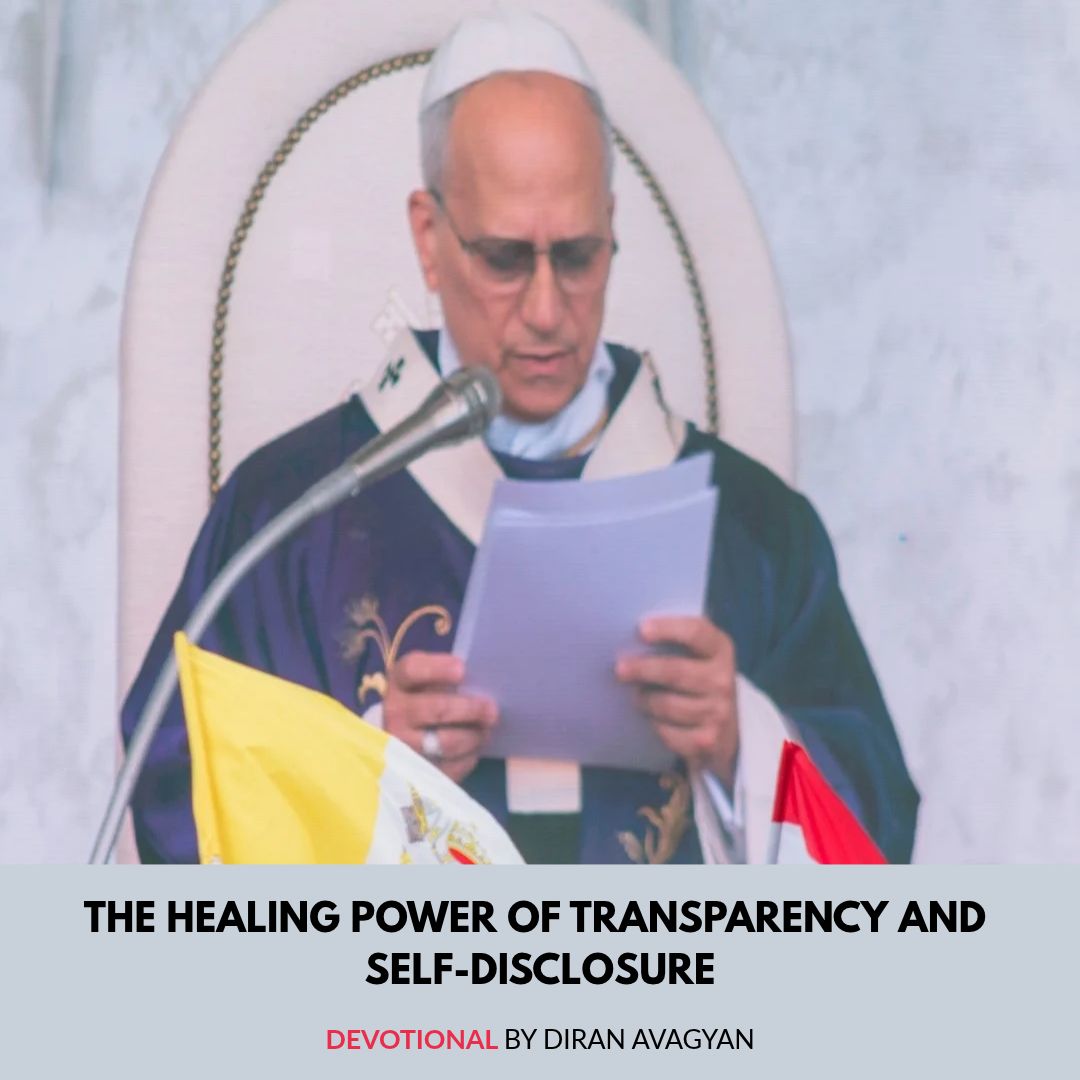
A few days ago, the world was shaken by shocking news from the Vatican concerning Pope Leo’s hospitalization, surgery, and diagnosis of lung cancer. This sudden announcement from historically one of the most secretive institutions was a remarkable manifestation of transparency and self-disclosure, inviting prayers from around the world.
As Pope Leo recovers from surgery at Rome’s Gemelli Hospital, children from the hospital’s oncology ward have sent him messages and drawings. Angelo, a 7-year-old boy who had been hospitalized for 36 days, wrote a touching message to the Pope, assuring him, “My mom and I pray for you every evening,” Vatican News reports.
This made me reflect on the healing power of humility and shared vulnerability, or the lack thereof, as reflected in our society.
Throughout the years of my ministry, I have noticed a tendency to conceal physical illness, something I have observed particularly within Armenian culture. I have witnessed patients suffering from loneliness, among other things, not because they lacked supportive family and friends, but because they chose to conceal their illness. In our church communities, we often hear of the deaths of dear people who depart from us seemingly suddenly, without any prior indication of their illness.
Reflecting on this hush-hush attitude, I presume that some critically ill individuals feel that their established self-image of strength and invulnerability is threatened by illness.
A study entitled “Hide and ‘Sick’: Self-Concealment, Shame and Distress in the Setting of Psycho-Oncology,” published online by Cambridge University Press in 2017, suggests an association between shame, self-concealment, and psychological distress. Concealing physical illness as a means of preserving an image of strength, dignity, and invulnerability may reflect, in part, cultural expectations, but also serve as a psychological defense mechanism.
It is unfortunate when suffering becomes a source of shame rather than an occasion for compassion, further intensifying the emotional isolation of those who are already suffering.
Pope Leo’s self-disclosure and the Vatican’s transparency set an important example of the power of vulnerability, reaffirming the words of the Apostle Paul: “For when I am weak, then am I strong” (2 Corinthians 12:10).
Christian faith does not teach us to deny our weaknesses or conceal our suffering. Rather, it reminds us that vulnerability does not diminish our dignity. It opens our hearts to the grace of God and the compassion of others. Perhaps true strength is not found in concealing our suffering, but in having the humility to acknowledge our vulnerability and allow others to share in our burdens.
