Devotional
Posted: 10/14/2026
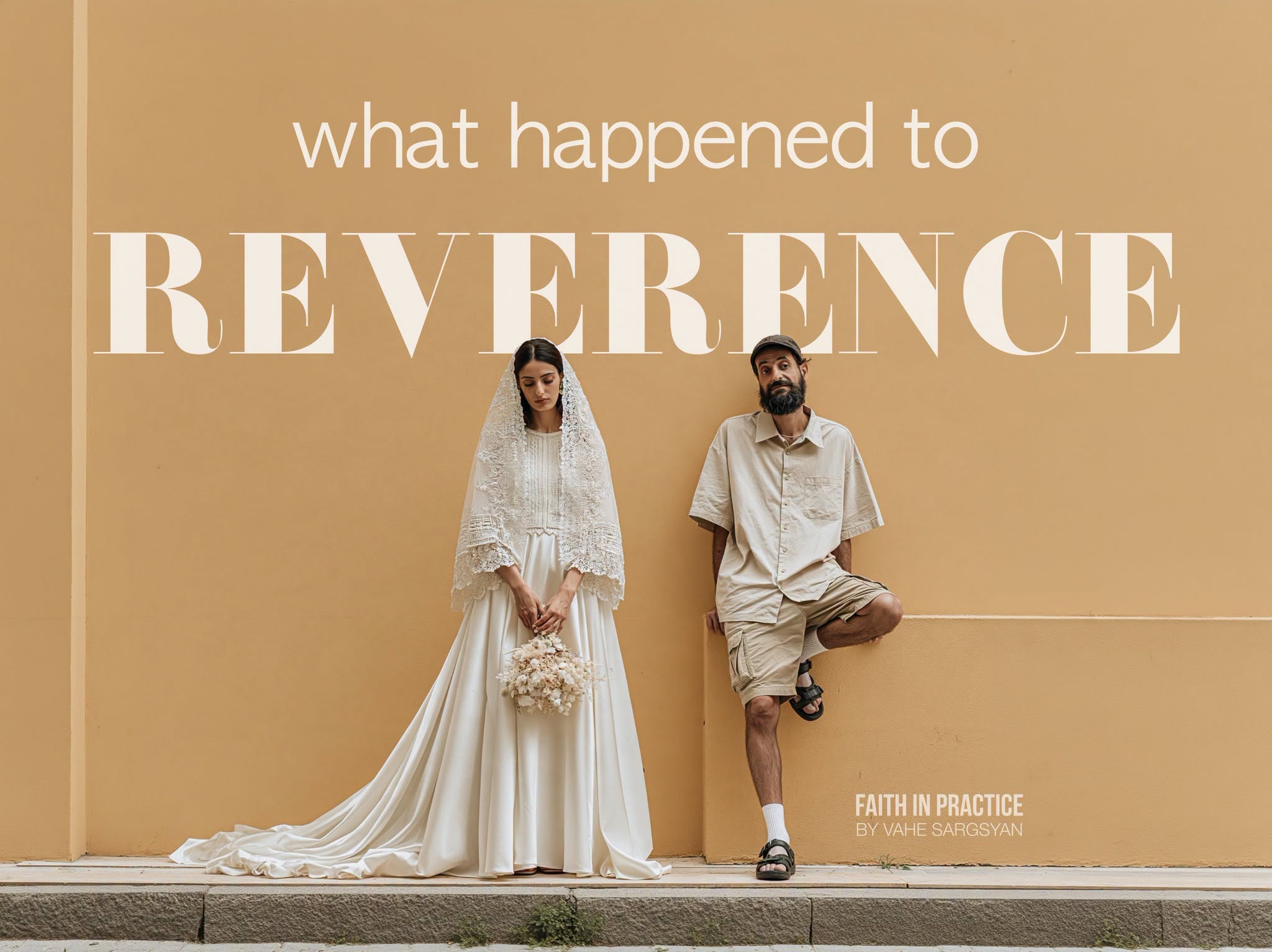
When did standing before the altar become just another part of the day’s schedule?
As a photographer, I have witnessed many weddings and baptisms in churches. Over the years, I have noticed something that increasingly bothers me. Newlyweds, parents, godparents, and sometimes even the people standing closest to the altar can be surprisingly casual. There is joking, unnecessary conversation, impatience, and sometimes a general feeling of, “Let’s finish this so we can move on to the celebration.” Often, only a fraction of the people who will later fill the banquet hall are present for the actual sacrament. The church becomes one stop in the program rather than the reason the day has meaning.
I do not think this is simply a problem of manners. It points to something deeper: we are slowly losing our sense of reverence. I was reminded of this recently during a conversation with a friend who approached almost everything from a relativistic point of view. His argument was that every action has layers, circumstances, and subjective reasons behind it, and therefore objective truth matters less than how the individual understands the situation. We pushed that reasoning to an extreme, and eventually even something as horrific as torturing and killing an innocent child could, in his view, be explained or justified by enough circumstances.
Circumstances certainly matter. Motives matter. They can help us understand why someone acted in a particular way, and they can affect responsibility. But understanding why someone committed an evil act is not the same as saying that the evil itself becomes good. If every moral truth can be changed by perspective, then eventually nothing remains truly good, evil, holy, or sacred.
During that conversation, I was described as “traditionalist” and “conservative,” as though this made my Christianity rigid. That accusation made me think. Christianity should not be confused with a modern political label, and tradition does not mean blindly defending everything old. But Christianity is traditional in a very important sense: we receive something that we did not invent. We receive a faith, a truth, and a way of life that existed before us and stands above our personal preferences.
Christ did not say, “I am one point of view among many.” He said, “I am the way, the truth, and the life” (John 14:6). St. Paul tells Christians, “Stand fast and hold the traditions which you were taught” (2 Thessalonians 2:15). Christianity is not afraid of difficult questions, but it teaches that truth still exists while we are asking them. Our task is not to reshape reality until it agrees with us, but to learn to understand reality in the light of God’s truth.
This is where reverence begins. Reverence is the recognition that something exists above me and does not depend on my approval. God is holy whether I acknowledge Him or not. Human life has dignity even when protecting that dignity is inconvenient. Truth remains truth even when it challenges me. Marriage, worship, promises, virtue, and the human body are not simply raw material for us to redefine according to preference.
St. Irenaeus warned against interpreting truth according to whatever direction personal inclination takes us, saying, “For in this way no one will possess the rule of truth.” St. John Chrysostom, commenting on St. Paul’s command to hold fast to what had been handed down, wrote, “Therefore let us think the tradition of the Church also worthy of credit.” Tradition does not mean refusing to think. It means having the humility to admit that we are not the final authority on everything.
And that brings us back to the altar. If a baptism is truly an entrance into the life of Christ, how can it be treated as a photo opportunity before the banquet? If marriage is truly a sacrament before God, then standing at the altar cannot have the same weight as cutting the cake or posing for pictures afterward. If the church is truly sacred space, our behavior should show that we understand where we are and before Whom we stand. Scripture tells us, “Let us have grace, by which we may serve God acceptably with reverence and godly fear” (Hebrews 12:28).
Reverence should also guide us outside the church. Instead of asking only, “What do I feel is right?” we should learn to ask, “What is true? What does God ask of me?” We should treat sacred things carefully, keep our promises seriously, respect human dignity, guard our speech, and examine our own desires rather than automatically obeying them. At the same time, reverence should never make us arrogant. If truth comes from God, then we do not own it. We submit to it ourselves first. That means being willing to repent, accept correction, and admit when we are wrong.
This kind of discipline does not make us less free. It frees us from becoming slaves to every impulse, emotion, trend, or opinion. Reverence reminds us that God is God and we are not—and that is not a limitation to escape from. It is the proper order of things.
