Devotional
Posted: 08/06/2026
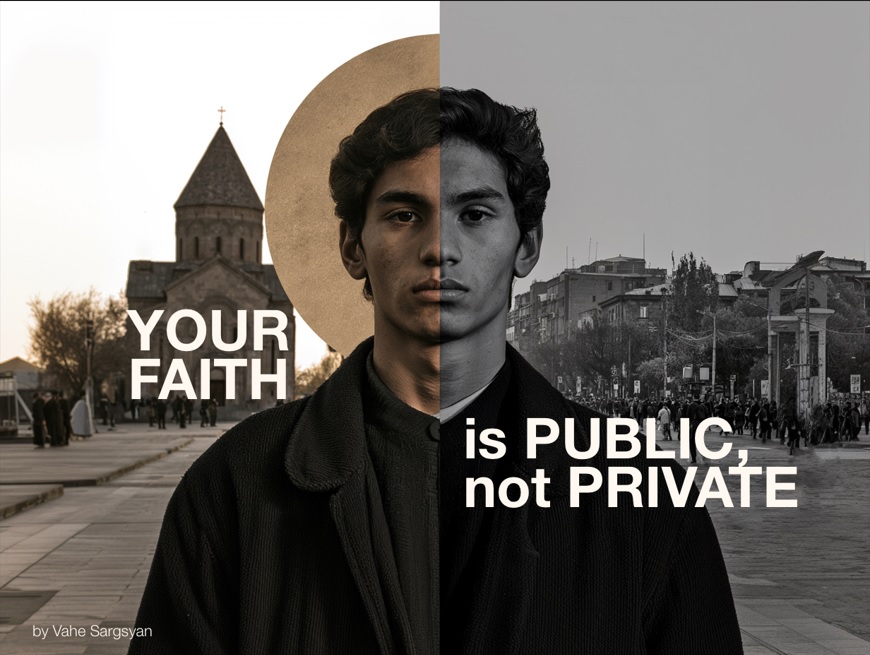
If someone watched your life for a month but never saw you enter a church, would they know that you are a Christian?
Modern life teaches us to separate faith from everything else. Religion belongs in church. Business belongs at work. Personal choices are private. As a result, Christianity becomes only one part of life rather than the truth that shapes all of it.
Many Christians accept this division without realizing it. We pray, attend church, receive Holy Communion, and call ourselves believers. Yet outside the church, we may follow different standards. We become dishonest when money is involved. We gossip about others. We apply strict standards to others and double standards to ourselves. We observe religious traditions while refusing to forgive.
This does not always mean that we have rejected Christianity. It often means that we have accepted the idea that faith is private and should not interfere too much with our work, finances, relationships, or ambitions.
But Scripture leaves no room for such a division. St. Paul writes, “And whatever you do in word or deed, do all in the name of the Lord Jesus” (Colossians 3:17).
The important word is whatever.
Not only what we do during the Divine Liturgy. Not only what we say when speaking about religion. Everything we do should reflect our belonging to Christ.
A Christian business owner should conduct business differently. A Christian employee should work honestly, even when no one is watching. A Christian student should study without cheating. A Christian husband or wife should love, sacrifice, and forgive differently. Faith is not an accessory. It is the way we live everything else.
Christ says, “You are the light of the world. A city that is set on a hill cannot be hidden” (Matthew 5:14). Light is visible by its nature. In the same way, faith should be seen in our character: in how we speak, keep promises, handle money, treat the weak, respond to insults, and behave when we have power over others.
This does not mean performing religion for attention. It means living so consistently that our actions confirm what our lips profess. St. Paul warns of those who “profess to know God, but in works they deny Him” (Titus 1:16). We deny Christ when our conduct repeatedly contradicts our confession.
This is especially serious when Christianity is tied to national identity. We may proudly call ourselves the first Christian nation, defend the Church, and honor our Christian heritage. But heritage cannot replace discipleship. Our history shows that our ancestors believed. Only our lives can show whether we do.
St. Ignatius of Antioch writes, “It is better for a man to be silent and be [a Christian], than to talk and not to be one.” He continues, “It is good to teach, if he who speaks also acts” (Letter to the Ephesians, 15).
Christianity has never been merely a religion practiced inside church walls. It shapes the way we work, speak, forgive, raise children, honor commitments, and love our neighbors.
Our faith is also not given to us for ourselves alone. St. Paul writes, “Through love serve one another” (Galatians 5:13). Our families, coworkers, employees, customers, friends, and even strangers should experience something of Christ through the way we treat them. Faith that never reaches our neighbor has not yet reached every part of our own life.
Faith is never truly private. It eventually becomes visible through the way we live.
The question is not whether our faith is public.
The question is: What does our life reveal about it?