The Diocese
Posted: 07/10/2026
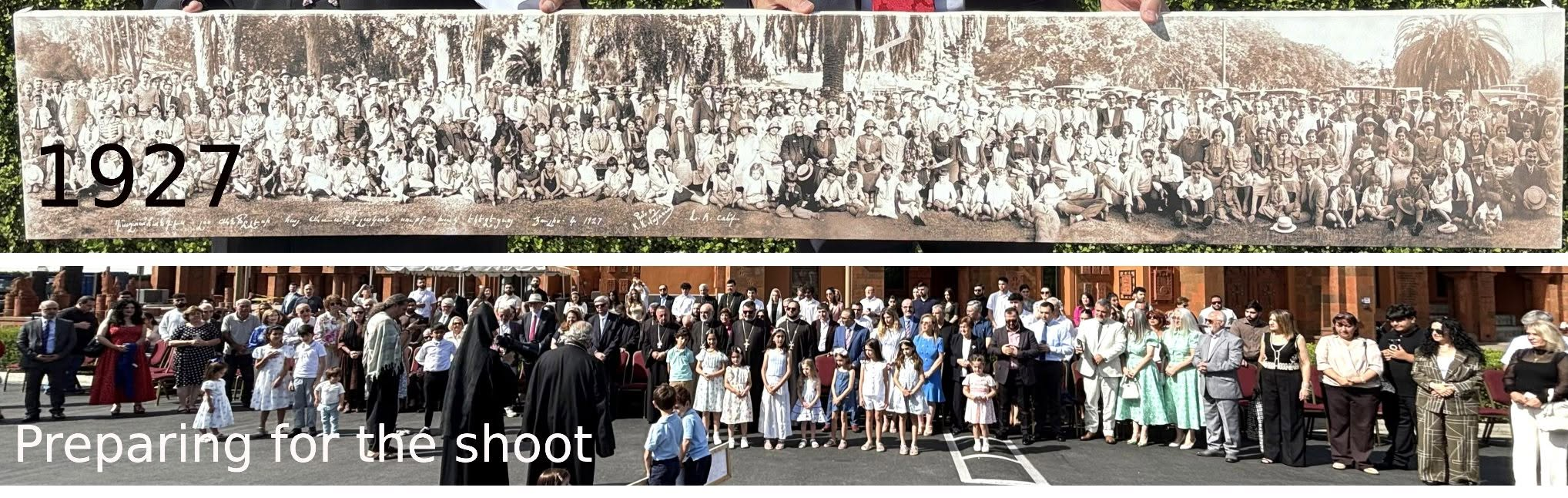
A century ago, members of the Armenian Church in Los Angeles assembled for a picnic to celebrate their new home, the United States of America. It was the Fourth of July 1927, and at that celebration they gathered to be photographed with their Parish Priest, Fr. Adom Melikian. Less than a decade earlier, the people in this photograph were passing through the most traumatic events of their lives. They were all survivors of the Armenian Genocide.
One hundred years later, on July 4, 2026, Archibishop Hovnan Derderian, Primate of the Western Diocese, invited clergy and laity in the Los Angeles area to participate in the reenactment of that historic picture. Assembled at the St. Leon Ghevondyants Armenian Cathedral, the group gathered around their Primate for this historic picture.
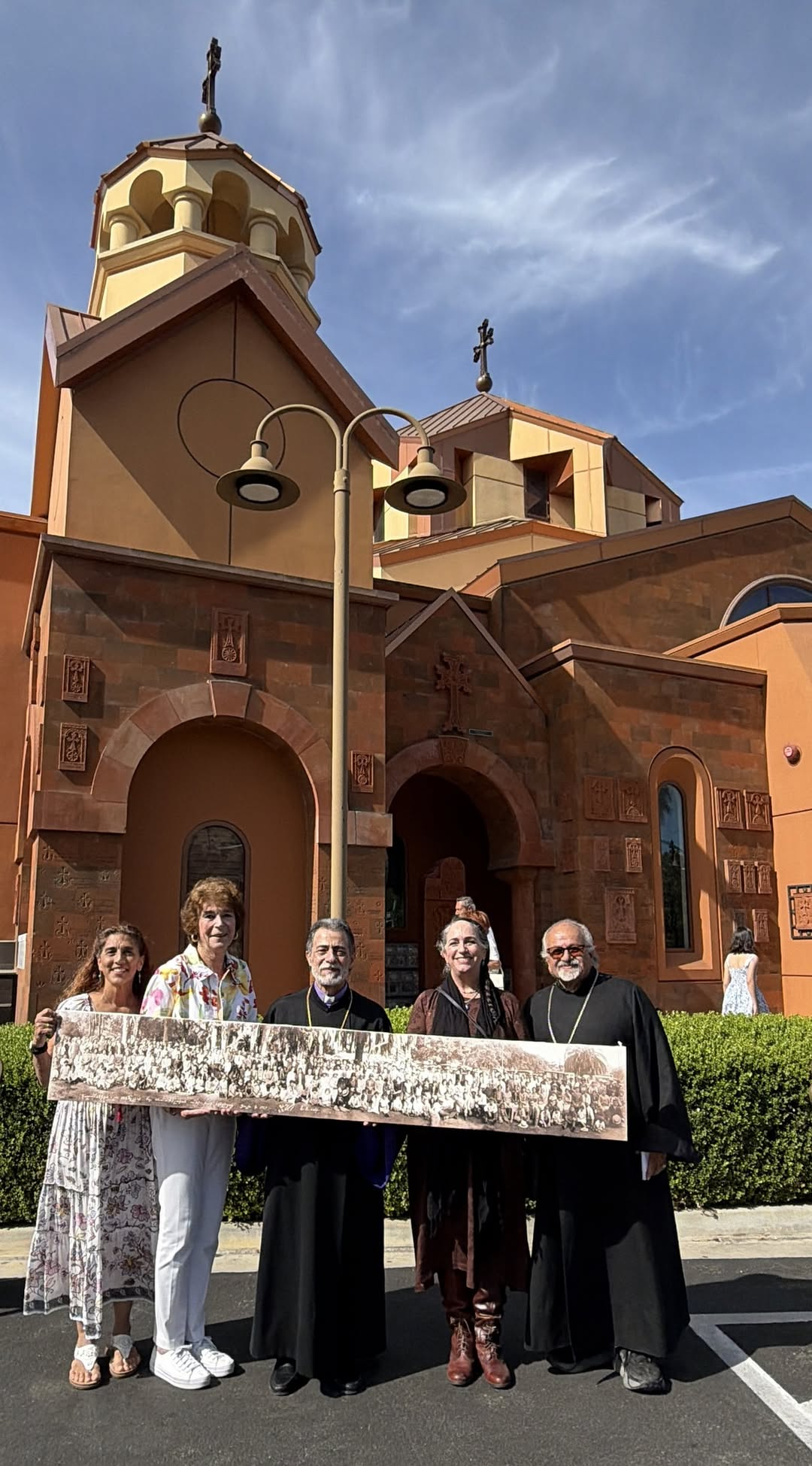
The connection to the 1927 group photograph was made on many levels. Among those assembled were Diane Jebejian and Ronda Berkeley, the great granddaughters of Fr. Adom Melikian, who had been consecrated a priest a decade early, at the direction of the Mother See of Holy Etchmiadzin. As the first and only priest in Los Angeles at the time, he organized the formation of the Holy Cross Armenian Church.
The photo session ended with a thanksgiving prayer offered for the United States. According to Archbishop Hovnan, this coming Sunday, July 12, prayers of thanksgiving will be offered from all Diocesan churches.
The Reenactment photo is one of several events commemorating the Western Diocese's Centennial Anniversary. With the theme, "The Armenian Family in Motion," events of the jubilee year will highlight the Western Diocese's many programs, activities and missions.
According to the chairman of the 100th Anniversary Steering Committee, Fr. Vazken Movsesian, "The Spirit of the Armenian People was captured in that photo of 1927, and today we wanted to recreate that same spirit around the clergy and in the shadow of the Church. The activities of the Centennial Year are the platform on which that same spirit will be projected into the second century of the Armenian Church in America."